

Following the Buddha – The Phudyaḥ (Dīpaṅkara) Yātrā of the Pañcadāna Festival in Patan
Curated by Christiane Brosius and Nutan Sharma (2020/21 CE)
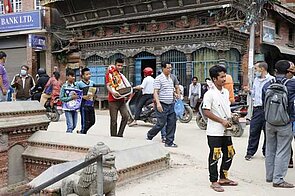
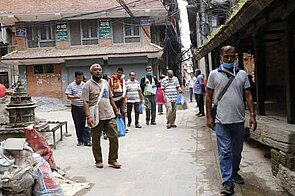
The Dīpaṅkara Buddha, or ‘Maker of Light’, is said to predate the historical Gautama Buddha, and is often equated with the first Buddha. Pañcadāna (lit. ‘five offerings’) is a festival in which the initiated Śākya and Vajrācārya males have to manifest their monastic status by going from house to house to collect alms from at least seven houses. In the historic city of Patan, this festival is known as Yala (Patan) Pañcadāna. It is celebrated on the 8th lunar day of the bright fortnight of the Śrāvaṇa month according to the lunar calendar; in 2020, that day fell on July 28.
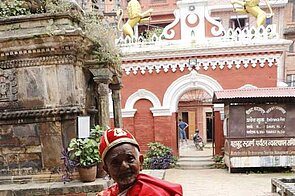
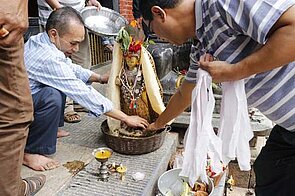
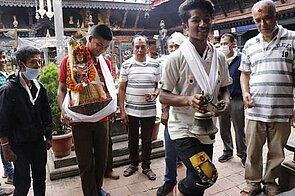
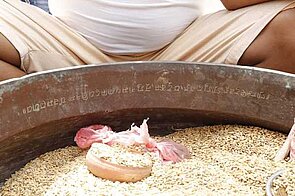
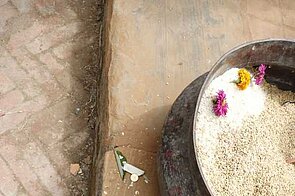
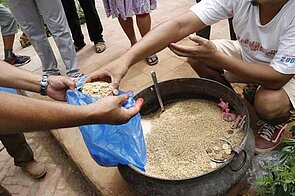
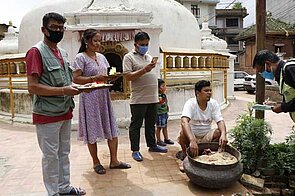
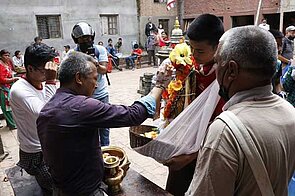
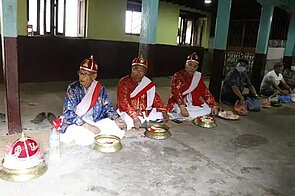
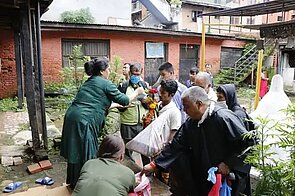
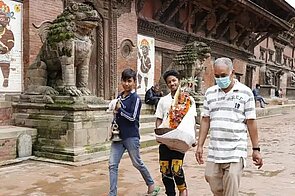
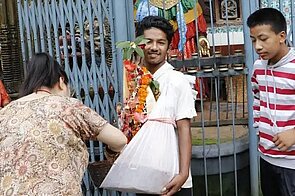
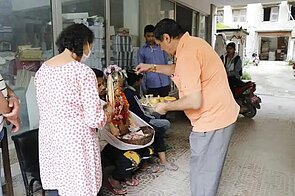
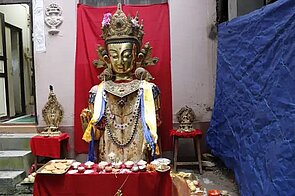
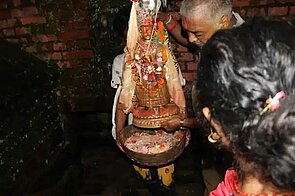
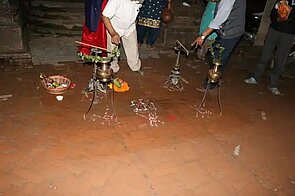
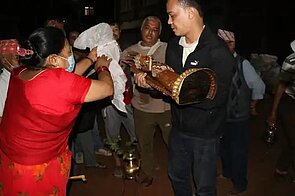
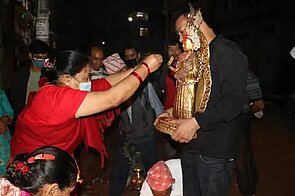
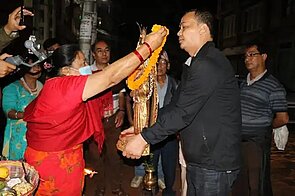
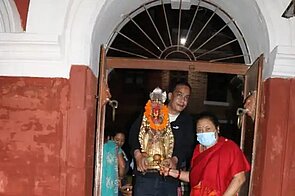
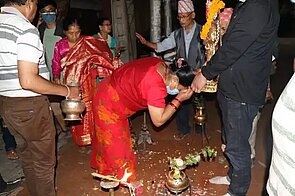
On the day of Pañcadāna, initiated male lay devotees offer alms to the Vajrācārya priests and Śākya householder monks. Of central importance is Phudyaḥ – a approximately 60 cm high gold-plated copper icon of the Dīpaṅkara Buddha. The icon of the deity is carried from house to house, and from monastery to monastery, by the Śākyas of the Ukubahāḥ monastery. When the deity visits the selected places, it is worshipped with gifts (dāna). Offerings are mainly rice grains, wheat grains, salt, fruits, money and the likes.
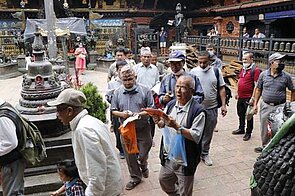
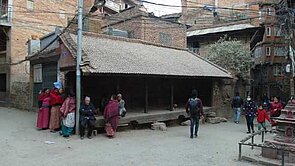
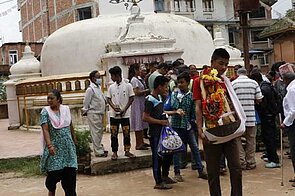
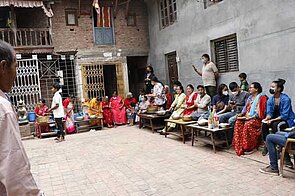
The Phudyaḥ Yātrā continues from morning until late evening. The icon of Phudyaḥ, usually kept in the Ukubāhāḥ monastery, is cleaned one day before and on the next day, in the morning on the very day of the procession, it is displayed in the northern wing of the monastery with its ornaments and full decorations. At that time, local residents, mainly Śākyas of the locality, come to offer their pūjā and alms to the deity. After that the yātrā begins its traditional route.
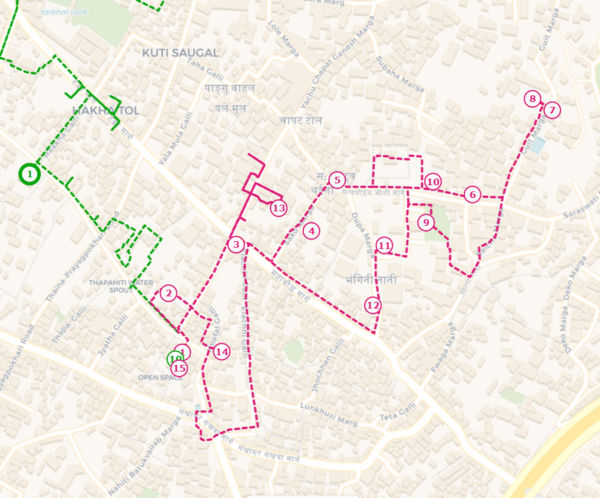
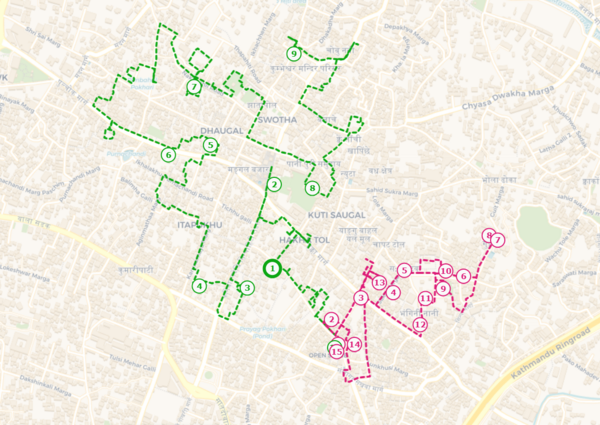
The route can be divided into two parts. The first circumambulation with 10 stops starts and ends in Ukubāhāḥ in the morning. Even upon returning to its home monastery, the icon of the deity does not enter the vihāra. It remains outside while participants are allowed to enter the monastery to have their lunch1. The second circumambulation with 15 stops – from noon to evening – takes a different route 2
1. This part seems to be dedicated to the Guitanakiṃ with whom the Dipaṅkara Buddha accepted the first dāna according to the above-mentioned legend. ↩
2. This part seems to be dedicated to the King Sarvānanda of the legend with whom the Dipaṅkara Buddha accepted the second dāna, as this second route of the jātrā goes through the royal palace of Patan.↩
Michaels, Axel. “From Syncretism to Transculturality: The Dīpaṅkara Procession in the Kathmandu Valley.” In South Asian Festivals on the Move, edited by Ute Hüsken and Axel Michaels, 317–42. Wiesbaden: Harrassowitz, 2013..
First Walk (red route)
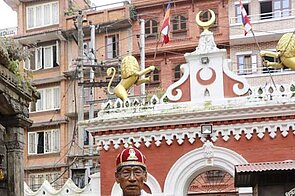
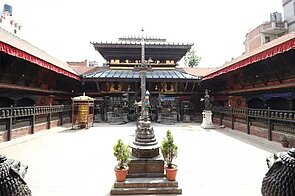
1 - Oku Bāhāḥ (1114 CE) || ओकु बाहा:
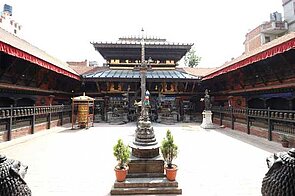
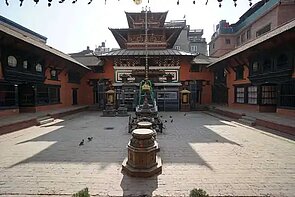
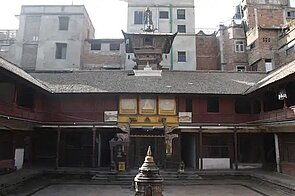
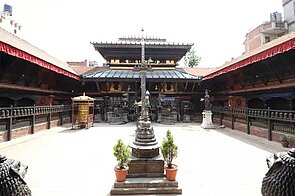
The Oku Bāhāḥ (Śivadevasaṃskārita Rudravarṇa Mahāvihāra) is one of the oldest and most well-preserved bāhāḥs of Patan.
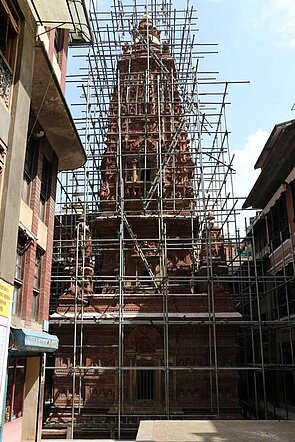
2 - Mahābuddha Mandira (1601 CE) || महाबुद्ध मन्दिर:
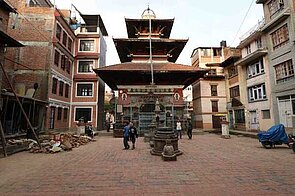
The Mahābuddha Mandira is one of the most famous Buddhist śikhara styled temples in Patan.
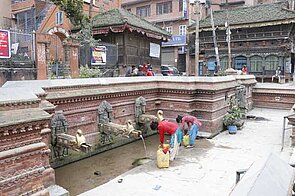
3 - Lũ Hiti (Sundhārā) || लुँ हिति:
This is one of the oldest Hitis in the Kathmandu Valley. It dates back to early Licchavi period.
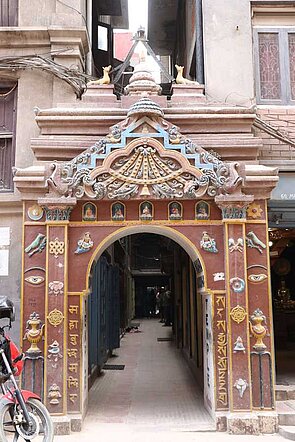
4 - Tana Bāhāḥ || तन बाहाः
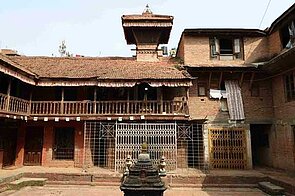
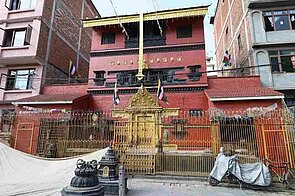
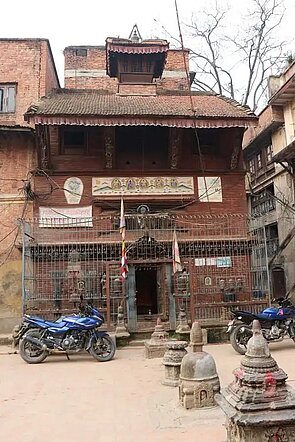
This branch of Oku Bahāḥ was rebuilt in 1948 by Harṣa Bahādura Śākya and is inhabited by Therāvādī Buddhist nuns. It has no proper shrine to house its esoteric deity Akṣobhya Buddha. Therefore, the deity is kept inside a simple cement-plastered structure in the back (locally called kvāḥpādegaḥ). A dharmadhātujinālaya caitya is established in front of it.
5 - Lāchi Phalcā (late 17th cent. CE) || लाछि फल्चा:
This five-bay Phalcā remains an important site for Nāmasaṅgīti recitations.
6 - Nāmasaṅgīti Phalcā (early 18th cent. CE) || नामसङ्गीति फल्चा:
This three-bay Phalcā was established in the early 18th century. It is located at Pinchẽ, to the north of an eleven-bay phalcā and to the west of a small temple. It contains statues of Sarasvatī and Nāmasaṅgīti. The Matsyendranātha Guṭhī regularly recites Nāmasaṅgīti at this site.
7 - Guitaḥ Caitya 2 || गुइत: चैत्य २:
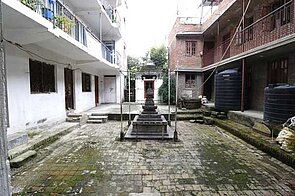
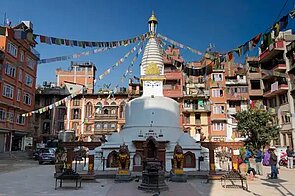
Guitaḥ Caitya 2 is built on a circular plan with four niches attached to the drum at each of the four cardinal directions. The platform is paved with teliā tiles and has a stone edge. A fire alter can be found in the courtyard in front of the shrine. The main deity is Akṣobhya and his statue is placed in the western niche. This is unusual, as he is normally located on the eastern side of a caitya. Here, however, he faces towards the main deity in the Cīdhã Bahī. This main western niche is adorned with a stone doorframe displaying images of the Five Buddhas.
8 - Cīdhã Bahī (Licchavi period?) || चीधँ बही:
Cīdhã Bahī is also known as Vasūccaśīla Mahāvihāra and is located at the northern end of the old Guitaḥ area. It is assumed to date back to the Licchavi period.
9 - Bhinchẽ Bāhāḥ (ca. 1430 CE) || भिन्छेँ बाहा:
The earliest reference to Bhinchẽ Bāhāḥ or Mayūravarṇa Mahāvihāra is found in a palm-leaf manuscript dated NS 550 (CE 1430). Bhinchẽ Bāhāḥ is located to the southeast of Subāhāḥ (LAL1920) and is separated by a street that runs from east to west. Its classical name is Mayūravarṇa Mahāvihāra.
10 - Pinchẽ Bāhāḥ (1669 CE) || पिन्छेँ बाहाः
This Bāhāḥ was established by Jñānacandra Vajrācārya of Bhinchẽ Bāhāla in NS 789 (1669).
11 - Dupāt Capāḥ (1670 CE) || दुपाः चपाः
Dupāt Capāḥ used to have one of the longest phalcās in Lalitpur. It is still used for festive occasions, though it has undergone major transformations since the 1990s.
12 - Siddhilakṣmī Mandira (built before 1652 CE) || सिद्धिलक्ष्मी मन्दिर:
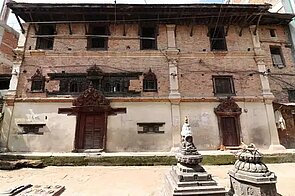
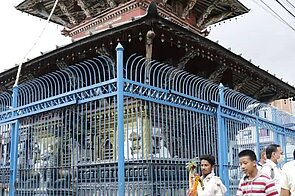
This temple located in Bhāginani Ṭola must have been built before 1652 CE (NS 772). This temple located in Bhāginani Ṭola is built in a pagoda style, albeit it is less elaborate than other pagoda-styled temples in Patan which are often heavily decorated and craved. Its doors and windows are simple and without any carvings. A statue of Lakṣmī is placed on a pedestal in the sanctum sanctorum.
13 - Yachu Bāhāḥ (ca. 1630 CE) || यछु बाहाः
Yachu Bāhāḥ is one of the major bāhāḥs of Patan. However, the area it covers is somewhat smaller in size in comparison to other such bāhās.
14 - Ubāhāḥ Bahī (before 1391 CE) || उबाहा: बही:
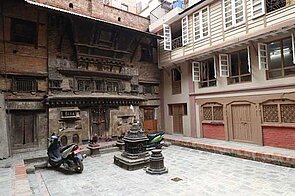
This monastic building is a branch of Oku Bāhāḥ. There is a Licchavi Caitya in its courtyard.
15 - Oku Bāhāḥ (1114 CE) || ओकु बाहा:
The Oku Bāhāḥ (Śivadevasaṃskārita Rudravarṇa Mahāvihāra) is one of the oldest and most well-preserved bāhāḥs of Patan.



Second Walk (green route)
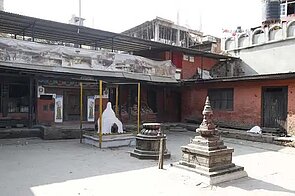
1 - Jyābā Bahī (ca. 1652 CE) || ज्याबा बही:
This old Bahī was heavily damaged by the 2015 earthquake. The saṅgha has been reduced to one Vajrācārya family.
2 - Mūla Coka (1666 CE) || मूल चोक:
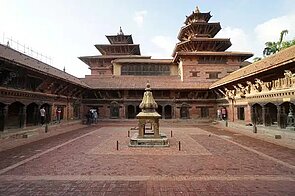
Mūla Coka is the most important courtyard of the Patan palace, which is why it is called Mūla Coka (meaning 'the major courtyard'). During the Malla period, royal assemblies and gatherings were held in this courtyard. Copper-plate inscriptions recording various treaties and declarations were attached to the courtyard's walls. Unfortunately, most of these inscriptions were lost in the recent past
3 - Taṅgaḥ Bāhāḥ (built before 1125 CE) || तङ्ग: बाहा:
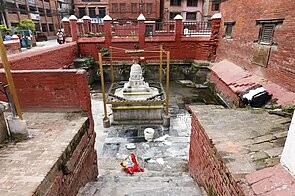
Taṅgaḥ Bāhāḥ is considered to be the oldest of the eighteen main bāhāḥs of Patan. Its classical name suggests that it was founded by the Licchavi king Bālārcana Deva. Taṅaḥ Hiti is associated with Buṅgadyaḥ's chariot procession because the accompanying chariot of Mīnanātha is assembled on the north-west side of the stepwell. During this process, the ropes (pau), used in making the chariot are drenched in the Hiti. The Hiti premises are cleaned at the beginning of the festival when Buṅgadyaḥ’s chariot is built. Traditionally, water from this and other hitis used to be offered to Buṅgadyaḥ during the procession.
4 - Taḥ Bāhāḥ (ca. 1427 CE) || त: बाहा:
Taḥ Bāhāḥ is located at the western part of the Taṃgala Ṭola. Its classical name is Bhuvanākaravarmasaṃskārita Dharmakīrti Mahāvihāra.
5 - Amitābhamahāmaṇḍala Caitya (17th cent. CE) || अमिताभमहामण्डल चैत्य:
Amitābhamahāmaṇḍala Caitya (17th cent. CE) is situated in the centre of the monastic complex of Dau Bāhā Nani.
6 - Hakha Bāhāḥ (c. 12th cent. CE) || हख बाहा:
Hakha Bāhāḥ has a prominent place among the bāhāḥs of Patan: the Kumārī of Patan is housed here and is selected from its saṅgha members.
7 - Naka Bahī (before 1658 CE) || नक बही:
This Naka Bahī is one of the major bahīs of Patan, also known as Gargadeva Saṃskārita Lokakīrti Mahāvihāra or Naḥ Bahī.
8 - Jyo Bāhāḥ (at least 17th cent. CE) || ज्यो बाहा:
According to a legend, Jyo Bāhāḥ was established during the reign of King Siddhinarasiṃha Malla together with Vajrakīrti Mahāvihāra and Om Bāhāḥ.
9 - Misā Hiti (probably built during the Licchavi period) || मिसा हिति:
The Misā Hiti (lit. ‘the Hiti for women’) is located adjacent to the main entrance of the Kumbheśvara Mandira and east of the Konti Hiti (LAL1030) at the Konti (Kumbheśvara) Ṭola. It is believed that the Hiti was constructed by the descendants of Kāśyapa Miśra who also constructed Konti Bahī (LAL0101). The Hiti has seven water conduits.
10 - Oku Bāhāḥ (1114 CE) || ओकु बाहा:
The Oku Bāhāḥ (Śivadevasaṃskārita Rudravarṇa Mahāvihāra) is situated at the southeast corner of Mangal Bazar. 'Oku' is derived from 'õkuli', an ancient Newari word denoting a southeastern direction. This vihāra is one of the oldest and most well-preserved bāhāḥ in Patan. It has the greatest number of branches (29) of all the bāhāḥ in the Valley and the second largest Saṅgha (Locke 1985, 90).






 Datenschutz Impressum