
Network and Partners
The Nepal Heritage Documentation Project (NHDP), based at the Heidelberg Centre for Transcultural Studies and the Heidelberg Academy of Sciences and Humanities, works closely with the University Library Heidelberg and the Research Unit “Documents on the History of Religion and Law of Pre-modern Nepal.” This research unit investigates 18th–19th century Nepali documents—temple records, administrative papers, and legal texts—to understand state formation and social change in the Himalayan region. With teams in Heidelberg and Patan, it produces digital editions, translations, and an open-access database that complements NHDP’s work on historical sources for monuments.
In Nepal, NHDP’s key partners include the Department of Archaeology (Government of Nepal) and the Saraf Foundation of Himalayan Traditions and Culture. We also work closely with the Kathmandu Valley Preservation Trust (KVPT), UNESCO Nepal, and Kathmandu University (Centre for Art and Design). During its pilot phase (2018–2020), NHDP collaborated with i3mainz.
Together with architects, historians, anthropologists, and digital heritage specialists, NHDP strengthens networks for heritage preservation and supports the sustainable use of its database across Nepali institutions.
Associated Projects
Anthropology of Inscriptions: Memory and Cultural Heritage in the Public Sphere (2022—23)

Part of Heidelberg University’s Flagship Initiative Transforming Cultural Heritage, this project studied inscriptions, graffiti, and other public writings in the Kathmandu Valley. In collaboration with NHDP and the Research Unit on Pre-modern Nepal’s legal and religious documents, it documents and publishes selected inscriptions digitally. Using methods from Visual Anthropology and Philology, it examined how inscriptions shape memory, identity, and heritage—many now endangered by rapid urban transformation.
Heritage as Placemaking: The Politics of Solidarity and Erasure in South Asia (2021-25)
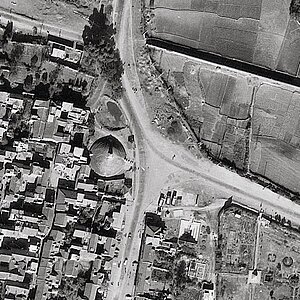
This project (HaP) explores how heritage can foster solidarity and how communities mobilize it against challenges such as urbanization, displacement, and real estate development. Led by teams in Heidelberg, Kathmandu, London, and Delhi, HaP highlights local agency, critiques expert-driven heritage models, and contributes to decolonizing heritage discourse across South Asia.
Documents on the History of Religion and Law of Pre-modern Nepal
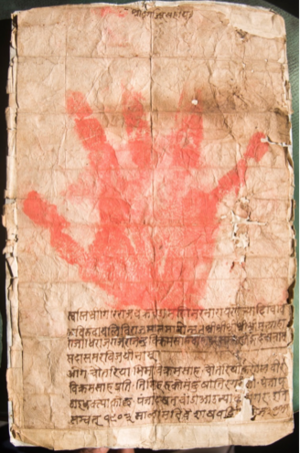
The project "Documents on the History of Religion and Law of Pre-modern Nepal" investigates Nepal's rich textual material from the 18th and 19th centuries, including temple documents, administrative records, and legal documents. It explores the socio-cultural transformations brought about by the formation of the Himalayan state and the expansion of Hindu rule. The project, with research units in Heidelberg and Patan, systematically studies this unique corpus and provides digital scholarly editions and translations of selected documents. A key aspect of this project is the creation of a digital open access database, which consolidates references to both edited and unpublished documents. The project shares the goal of creating an open access database with the Nepal Heritage Documentation Project (NHDP). NHDP utilizes this research as a historical resource for information on monuments.
Urban Transformation and Placemaking: Learning from South Asia and Germany (2020-23)
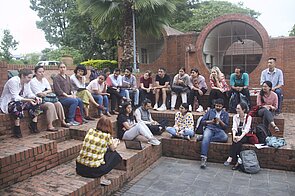
Funded by DAAD and based at CATS/HCTS within the Shaping Asia initiative, this project partnered with Kathmandu University’s School for Art and Design and the Delhi School of Planning and Architecture (SPA). It promoted exchange among students, faculty, museums, architects, and NGOs. The partnership examines how cities like Delhi, Kathmandu or Heidelberg respond to challenges—demographic change, earthquakes, climate change, migration, and heritage endangerment—through placemaking and urban innovation, offering comparative insights into South Asian and European urban transformation.


 Datenschutz Impressum