Podcasts - Decolonization Series
Contemporary art practice, solidarity and decolonisation in Nepal - 08.05.2023
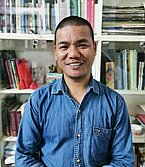

Sheelasha Rajbhandari and Hit Man Gurung with hosts Christiane Brosius and Sabin Ninglekhu
In this episode of the Heritage as Placemaking Podcast, Christiane Brosius and Sabin Ninglekhu sat down with visual artists and curators Sheelasha Rajbhandari and Hit Man Gurung. Sheelasha and Hit Man walked us through their artistic and curatorial practices with a particular eye on the connection between their work and cultural heritage, the many faces of indigenous resistance, and the plural dimensions of decolonization. With a critical eye on the notion of heritage, particularly the construction of a national or ‘representational’ image of the state, Sheelasha and Hit Man highlighted the potential of civil solidarity and commoning to create transnational artistic counter-narratives. In doing so, they suggested that forging solidarity effects a kind of artistic practice as placemaking, rendering visible traditions of making and knowing that have previously been marginalized, and which contribute to the making of new social ties beyond the ethnic or national.
Sheelasha Rajbhandari and Hit Man Gurung are Kathmandu-based visual artists, curators, cultural organizers, and founding members of ArTree Nepal. Hit Man’s art deals with ideas of fragmented histories, failures of human revolution and human mobilities. His current work speaks to the strong impact of global capitalism and its unprecedented demand for cheap labor. Sheelasha’s work centers on oral histories, myths, material culture, and ritual as sources of alternative narrative, presenting them as a counterpoint to mainstream history and knowledge systems. Sheelasha and Hit Man recently co-curated the Kathmandu Trienniale 2077 and the first Nepal Pavilion at the 59th Venice Biennale (2022). Listen to the episode here.
Heritage preservation, decolonisation and conservation practices in Nepal - 06.12.2023
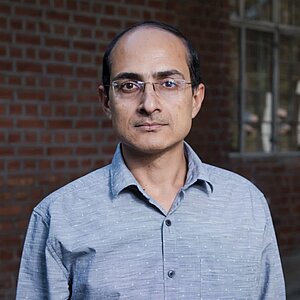
Dr. Neel Kamal Chapagain with hosts Sabin Ninglekhu, Monalisa Maharjan and Binita Magaiya
In the second episode of the Decolonization Series of the Heritage as Placemaking podcast, Dr. Neel Kamal Chapagain sat down with our hosts to talk about his ongoing work on heritage and how this relates to broader questions of decolonization. The conversation, which was held in Nepali and English, reflected upon the idea of authenticity as it relates to the preservation of heritage, conservation practices in Nepal, the notion of power with regard to heritage hierarchy, and the relationship between home, heritage and urban planning. By speaking about locales as far apart as Lo Manthang, Upper Mustang and Pashupati, Dr. Chapagain and our hosts also reflected on the centralization of the heritage discourse in the Nepal context and proposed a wider alternative.
Dr. Neel Kamal Chapagain is Professor and Director at Centre for Heritage Management, Ahmedabad University. He also developed the Master in Heritage Management at Ahmedabad University, launching the program in 2015. Dr. Chapagain’s research is concerned with heritage discourses, community engagement, participatory processes, heritage values and authenticity, among others. A trained architect, he has also taught at University of Wisconsin-Stevens Point (USA) as full-time teaching faculty and at the University of Wisconsin-Milwaukee as a Doctoral Teaching Assistant. His professional journey spans Nepal, Bhutan, India, and the United States. He has co-edited a book titled Asian Heritage Management: Contexts, Concerns and Prospects (Routledge, 2013) and coordinates a publication series from Nepal titled Reflections on the Built Environment and Associated Practices, of which the first volume was published in 2013, the second volume in 2016, and the third volume in 2019. Listen to the episode here.
Decolonizing Heritage through Women in Art - 11.06.2024
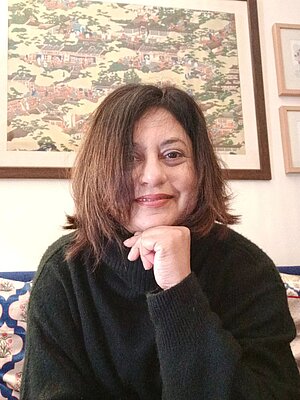
Anoli Perera with hosts Pooja Kalita and Emily Hyatt
In this episode, the visual artist Anoli Perera spoke to Heritage as Placemaking hosts Dr. Pooja Kalita and Emily Hyatt about her artistic practice and its connections to practices of decolonial placemaking. Perera introduced the hosts to her working process, from an interest in the histories of materials and redefining craft to positioning her work along matrilineal cultures of memory. Throughout the episode, she took us through the way that her sculpture and installation works, including "I Let My Hair Loose: Protest series," "Dinner for Six," "Memory Keeper," and "Second Skin," explore myriad ways of making place.
Anoli Perera is an internationally acclaimed visual artist who at present works out of Colombo, Sri Lanka, and New Delhi, India. A recipient of numerous honors and awards, she has showcased her work all over the world. She works extensively with multimedia and her work repertoire consists of paintings, sculptor, installations and performances. Perera’s art creatively and self-consciously bridges the gap between the personal and the political and the local and the global. She often exposes the meaning of the political in its plurality, while bringing in aspects of her own personal life and weaving it into the larger issues that haunts South Asia in general—autocratic regimes with flawed paradigms of development and freedom that have been failing its citizens. Anoli Perera studied political science, economics and sociology at the University of Colombo, Sri Lanka, followed by a postgraduate diploma in international affairs. She lived in the US between 1988 – 1992 and took up art education programmes in California and at Princeton in New Jersey. She was also one of the founding members of the Theertha Association for Contemporary Sri Lankan Visual Artists in 2000. Listen to the episode here.
New Buddhist movements in Sri Lanka - 04.06.2025
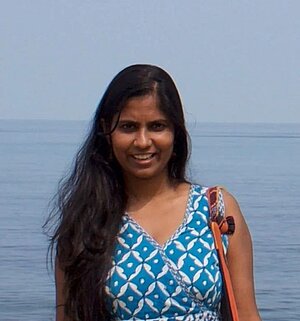
Anushka Kahandagamage
with host Pooja Kalita
In this episode our team member Dr. Pooja Kalita from the Colombo Institute spoke with Dr. Anushka Kahandagamage as she took us through New Buddhist Movements in Sri Lanka. The episode delved into how contemporary Buddhist practices intersect with ideas of heritage and evolving notions of religion, identity and politics in Post-War Sri Lanka.
Dr. Anushka Kahandagamage has a PhD in Religion from the University of Otago, New Zealand, where she researched new Buddhist trends in post-war Sri Lanka. Her work, through ethnographic and interdisciplinary methodologies, contributes largely to broader conversations on religion, modernity, and cultural transformation in South Asia. Listen to the episode here.
Heritage and creative forms of storytelling in South Asia through renditions of the Ramayana - 19.08.2025
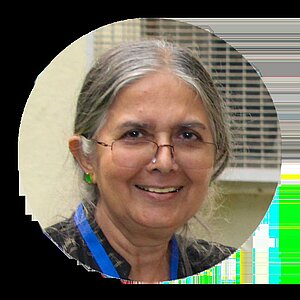
Roma Chatterji
with host Sasanka Perera
In this episode we journeyed through Ramayana Renditions, Heritage, and Creative Forms of Storytelling in South Asia; particularly in India and Sri Lanka, along with host, HaP principal investigator, and chairperson of Colombo Institute, Dr. Sasanka Perera. From ancient texts to modern performances, Dr. Perera, speaking with Dr. Roma Chaterji, explored how the epic continues to inspire diverse artistic and cultural expressions. This conversation uncovered the living legacy of the Ramayana in shaping identities, narratives, and regional traditions.
Dr. Roma Chatterji retired as Professor of Sociology from Delhi University and is currently visiting professor at Shiv Nadar University. Apart from her abiding interest in folklore and folk culture, she has also worked on collective violence and illness narratives and has published extensively on all these subjects. Her current work is on picture storytelling, and she has explored several such forms ranging from the traditional arts of Bengal and Madhya Pradesh to popular superhero comics. Listen to the episode here.
Tibetan women in India: Gender, heritage and diaspora - 22.08.2025
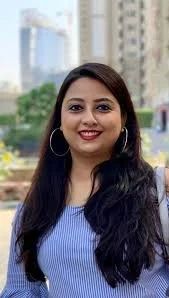
Amrita Saikia
with host Pooja Kalita
This episode, part of HaP's decolonization strand, brought together the intersections of gender, heritage, and diaspora with a focus on Tibetan women’s lived experiences in India. Dr. Amrita Saikia, spoke with HaP's research fellow, Dr. Pooja Kalita, discussing how gendered notions of heritage reshape cultural memory and resistance in exile. From domestic spaces to storytelling and culinary traditions, they explored how Tibetan women challenge male-centered nationalist narratives and create new “places” beyond geographic boundaries. The conversation also addressed the need to decolonize heritage discourse in South Asia, offering fresh insights into how heritage can be seen as a dynamic, evolving practice rooted in everyday life.
Dr. Amrita Saikia is an interdisciplinary researcher with a background in Disaster Studies, specializing in Conflict, Peace, and Development. She received her Ph.D. at the Tata Institute of Social Sciences (TISS), Mumbai, in 2022. Her research interests cut across forced migration, gender, ethnic conflicts, peace, public health, and development. Amrita’s work spans topics such as Tibetan refugees, indigenous women in peacebuilding in Northeast India, public health, disasters, and development. Her recently published monograph—Gender, Nation, and Nationalism: Perspectives of Tibetan Women in Exile, published by Routledge, is an outcome of her Ph.D. work. Amrita received the Fritz Thyssen Postdoctoral fellowship in 2023 and conducted her research at the German Institute for Global and Area Studies, Hamburg, Germany. Besides academia, Amrita has a keen interest in fiction writing, and she derives the inspiration for the stories from her ethnographic works. Listen to the episode here.
Religious heritage, consumerism and contemporary pilgrimage culture in South Asia - 04.09.2025
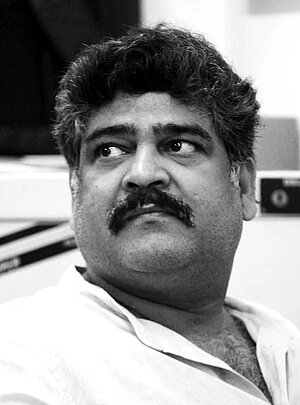
Ravi Kumar
with host Sasanka Perera
As part of HaP's Decolonization strand, in this episode, host and HaP principal investigator, Dr. Sasanka Perera, spoke with Dr. Ravi Kumar about the relationship between, religious heritage, consumerism, and contemporary pilgrimage culture, especially during big religious festivals attracting huge numbers of pilgrims. One of the highlights of this discussion was Kumar's deliberation on the Kumbh Mela – ‘Reinventing religion beyond the spectacular consumption at Maha Kumbh Mela'. Kumbh Mela, as we know is a major Hindu pilgrimage and festival, known as the world's largest public gathering, held every 12 years at different locations along sacred riverbanks in India.
Dr. Ravi Kumar works as an Associate Professor in the Department of Sociology, South Asian University (New Delhi). He was also the Chairperson of the Department of Sociology and Associate Dean of Faculty of Social Sciences. He co-edits book series on `Social Movements, Dissent and Transformative Action’ (Routledge: Delhi); ‘Conversations on/for South Asia’ (Aakar Books); and ‘Sociology/Anthropology Across Borders’ (Primus: Delhi). Listen to the episode here.
Contemporary Sri Lankan literature and heritage in South Asia - 07.10.2025
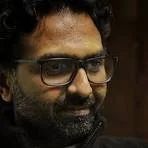
Kaushalya Kumarasinghe with host Pooja Kalita
In this episode of HaP's podcast, and related to the decolonization strand, Dr. Pooja Kalita spoke to Dr. Kaushalya Kumarasinghe about the evolving role of contemporary Sri Lankan literature in reshaping how we understand heritage in South Asia. Our guest, Dr. Kumarasinghe reflected on the ways literature challenges colonial legacies, offering nuanced portrayals of Sri Lanka’s complex history—from colonization and civil war to economic instability. We also explored his work as Director of the SAARC Cultural Centre, where he advocates for inclusive, people-led approaches to heritage that amplify marginalized voices and move beyond static, museumized narratives. This conversation reimagined heritage as living, collective, and transformative.
Dr. Kaushalya Kumarasinghe is a Sri Lankan novelist, researcher, translator, and cultural activist. He holds a Bachelor of Laws from the University of Colombo, an MA in Socio-Cultural Anthropology from Durham University, UK, and an MPhil and PhD in Sociology from South Asian University, New Delhi. Currently, the Director of SAARC Cultural Centre, Dr. Kumarasinghe’s fiction has been translated into English, Tamil, Urdu, and Hindi, and has been featured at prominent literary festivals and discussed in South Asian literary journals. His academic work, published in both Sinhala and English, has appeared in international journals. As a translator, he has introduced significant works to Sinhala readers, including the Sinhala translation of Alain Badiou’s In Praise of Love. Beyond writing and research, he has curated numerous cultural events and festivals, notably Red: Festival of Love. He also serves as a visiting academic at the Faculty of Graduate Studies, University of Colombo. Listen to the episode here.
Decolonising archeology and heritage in South Asia - 10.10.2025
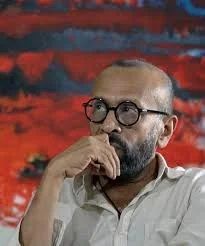
Jagath Weerasinghe
with host Pooja Kalita
In this thought-provoking episode of HaP's Decolonization strand, host and HaP research fellow, Pooja Kalita, sat down with distinguished heritage practitioner and artist – Prof. Jagath Weerasinghe to explore what “heritage” means in postcolonial South Asia, with a special focus on Sri Lanka. From unpacking colonial frameworks that shaped archaeological and heritage practices to discussing the challenges of decolonization, our guest reflected on how local communities play a vital role in transforming heritage from static objects into lived, meaningful places. We delved into his powerful public art projects and how creative expressions can help societies heal after conflict. A rich conversation for scholars, artists, and activists reimagining heritage from the ground up.
Prof. Jagath Weerasinghe is a renowned Sri Lankan artist, archaeologist, intellectual and cultural thinker whose work bridges contemporary art, memory, and heritage. His work spans several decades of invaluable contribution to Heritage Studies from the Global South. The term "90s Trend" was coined by him to describe a significant movement in Sri Lankan contemporary art during the 1990s, which marked a shift toward politically engaged, socially conscious, and emotionally charged artistic expression. As the founder of Theertha International Artists Collective and former Director of the Postgraduate Institute of Archaeology, he has been a leading voice in reimagining heritage beyond colonial frameworks. His art and advocacy explore how places hold memory, and how heritage can become a space for healing,resistance, and transformation. Listen to the episode here.
Aragayala as living heritage - 17.10.2025

Samal Hemachandra with host Pooja Kalita
In this episode, as part of the project's Decolonization strand, HaP research fellow, Pooja Kalita and guest, Samal Hemachandra explored how Sri Lanka’s Aragalaya—a powerful people’s movement for justice and accountability—could be understood as a form of living heritage. Our guest delved into the symbolic significance of protest sites like Galle Face Green, unpacking how space, art, performance, and collective memory shape political identity and resistance. We discussed how movements like Aragalaya challenge colonial and elite narratives of heritage, urging a shift toward grassroots, people-led commemorations. We also discussed the crucial question - 'Can heritage preservation serve as a tool of solidarity without erasing a movement’s radical core?'
Samal Hemachandra is a historian of modern and contemporary Sri Lanka. He is a lecturer at the Department of History, University of Colombo and a PhD student at Faculty of History, University of Cambridge. Listen to the episode here.


 Privacy Imprint